Cooling Pillows for Hot Sleepers: Materials, Loft and Options to Consider
By Natural Sleep Hub Editorial Team. Research-based buying guide updated September 28, 2026.
Disclosure: As an Amazon Associate I earn from qualifying purchases. Product links may be affiliate links. Commercial relationships do not determine our conclusions.
How we evaluated this topic: This guide focuses on pillow materials, airflow, covers and loft choices that can matter for people who sleep hot. It does not treat a pillow as a medical solution for night sweats or unexplained overheating. We separate general material evidence from manufacturer-specific cooling claims.
Quick answer
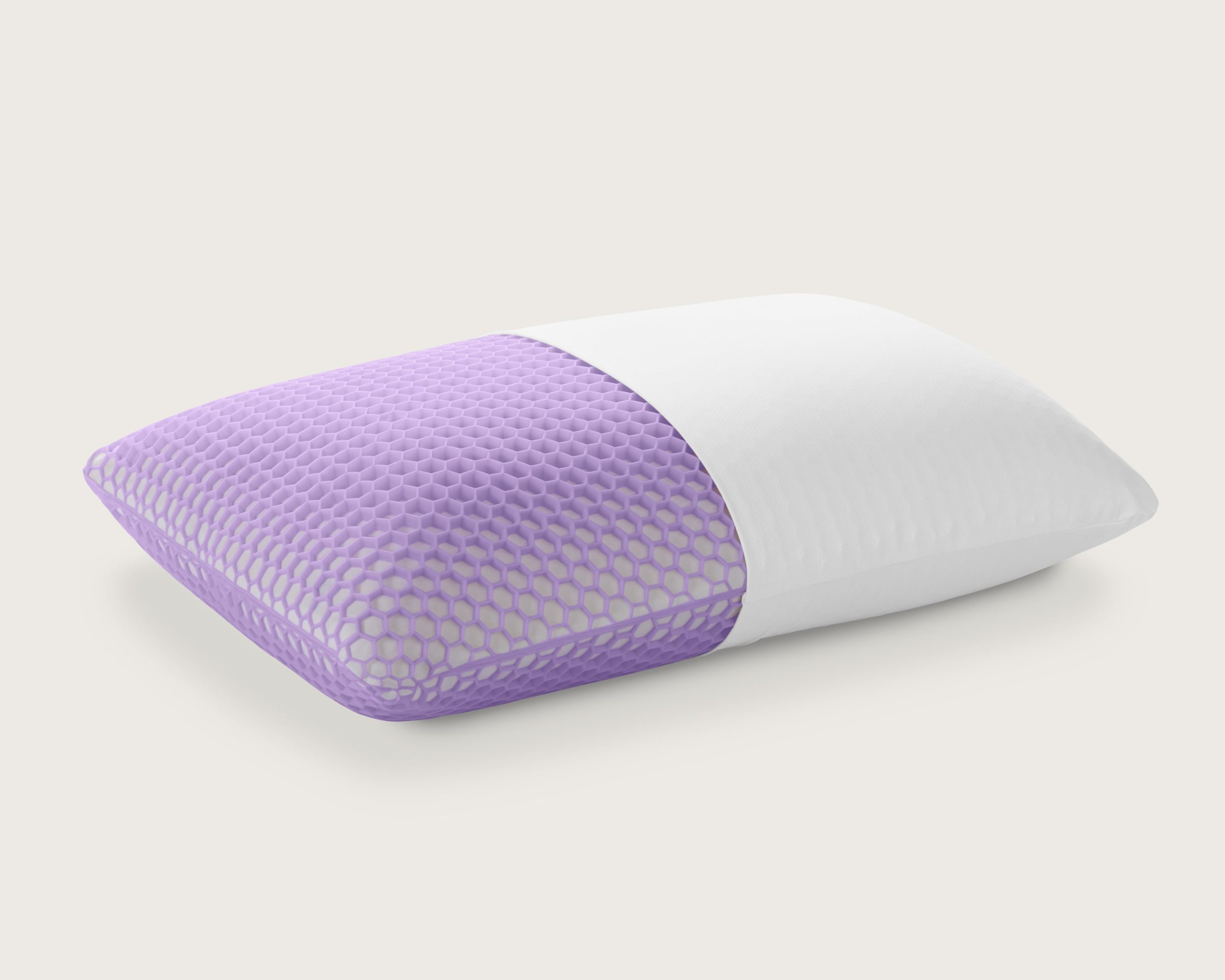
Our interpretation: A cooling pillow should be judged by more than a “cooling” label. The strongest practical signals are breathable or ventilated fill, a cover that does not trap moisture and heat, enough airflow around the head and neck, and a loft that keeps your sleep position comfortable without burying your face too deeply into the pillow.
Latex often performs well for hot sleepers because it is responsive and can be ventilated for airflow. Solid memory foam can contour closely but tends to retain more heat unless the design adds effective ventilation or other cooling features. The cover matters too: a breathable, moisture-wicking shell can make a meaningful difference in how warm the pillow feels.
In this guide
Why do some pillows sleep hot?
A pillow can feel warm when its fill absorbs body heat, when the surface hugs the head closely and reduces airflow, or when the cover does not release moisture efficiently. These effects often combine.
Sleep Foundation’s pillow testing methodology notes that both the fill and the shell influence temperature regulation. In its testing, breathable fills such as latex tend to perform better than solid memory foam for heat control, while moisture-wicking covers can improve overall comfort for hot sleepers.
That means the useful question is not simply “Does this pillow have cooling gel?” A better question is: How does heat move through the entire pillow system?
Cooling pillow materials: what tends to work best?
Ventilated latex
Latex is a strong material to consider for hot sleepers because it is responsive rather than deeply body-hugging, and many latex pillows use perforations or ventilation channels that allow air to circulate through the core.
Shredded latex
Shredded latex creates air spaces between pieces of fill. This can improve airflow and also makes the pillow more moldable than a single solid latex core.
Buckwheat and other highly breathable fills
Buckwheat hulls allow substantial air movement because the fill does not form a solid block. The trade-off is a firmer, noisier feel that is very different from foam or latex.
Down alternative
Some down-alternative pillows can sleep relatively cool, especially when paired with a breathable cover. However, shape retention and loft stability vary more than with latex.
Why the pillow cover matters for hot sleepers
A breathable core can still feel warm if the outer fabric traps heat or moisture against the skin. Covers made from breathable or moisture-wicking fabrics are generally more suitable for hot sleepers than dense, less-permeable shells.
A removable, washable cover is also useful because sweat and skin oils can build up over time. That is not a cooling technology by itself, but it improves long-term hygiene and can help the pillow maintain a fresher sleep surface.
Cooling is not enough: pillow loft still has to fit your sleep position
A pillow can sleep cool and still be a poor fit if its height is wrong for your body. Loft affects how the head and neck align with the rest of the spine, and it also changes how much of your face and neck sink into the pillow.
- Side sleepers usually need more loft to fill the space between the shoulder and head.
- Back sleepers often do better with a medium loft that supports the natural neck curve without pushing the head too far forward.
- Stomach sleepers generally need a lower profile to avoid excessive neck extension.
For hot sleepers, the best pillow is therefore not simply the coolest design. It is the coolest design that also gives you the right height and support for your sleep position.
Cooling pillows for side sleepers
Side sleepers often need a thicker pillow because the shoulder creates a larger gap between the head and mattress. That can make cooling more complicated: higher-loft pillows contain more material, and some thick foam designs can trap more heat.
A ventilated latex design can be a useful compromise because it provides height and responsive support without the same deep hug associated with some memory foam pillows. However, shoulder width and mattress firmness still affect the ideal loft.
Do memory foam pillows sleep hot?
Traditional solid memory foam tends to retain more heat than many latex or more openly ventilated fills because it contours closely and has less internal airflow. That does not mean every memory foam pillow sleeps hot, but the construction matters.
If you prefer the contouring feel of memory foam, look for designs with perforations, breathable covers, less dense foam, or other construction features intended to reduce heat buildup. Independent test results are more informative than a generic “cooling” label.
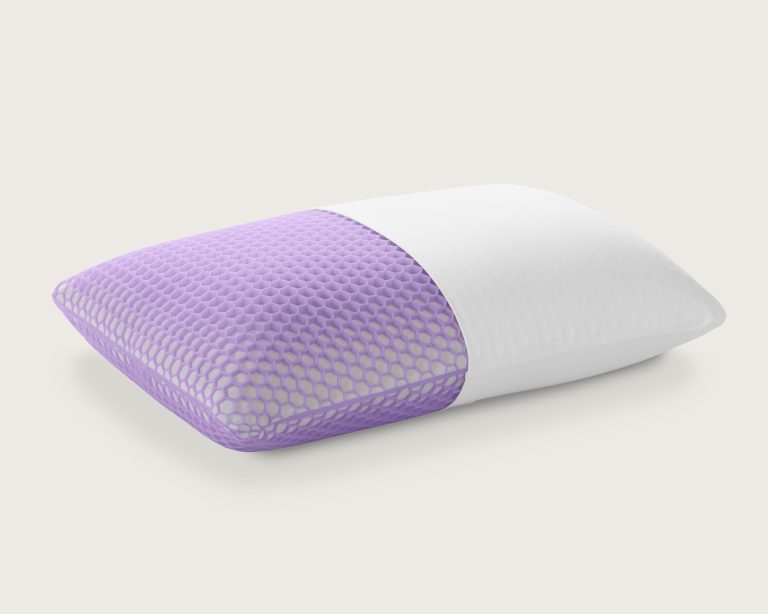
One option to consider: Purple Harmony Pillow
The Purple Harmony Pillow is one product we have researched in detail that fits the design principles discussed in this guide.
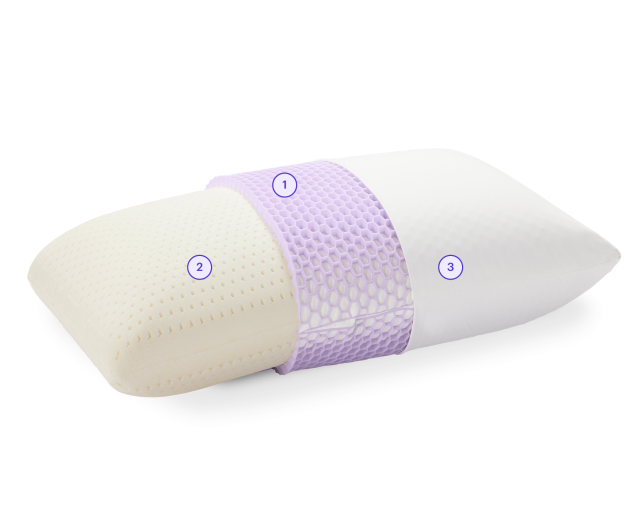
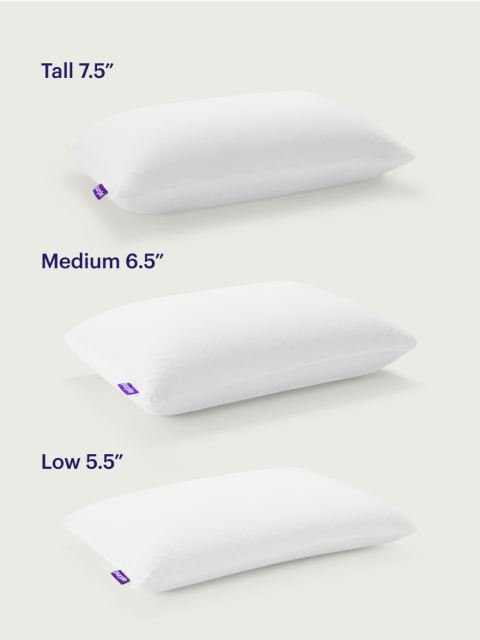
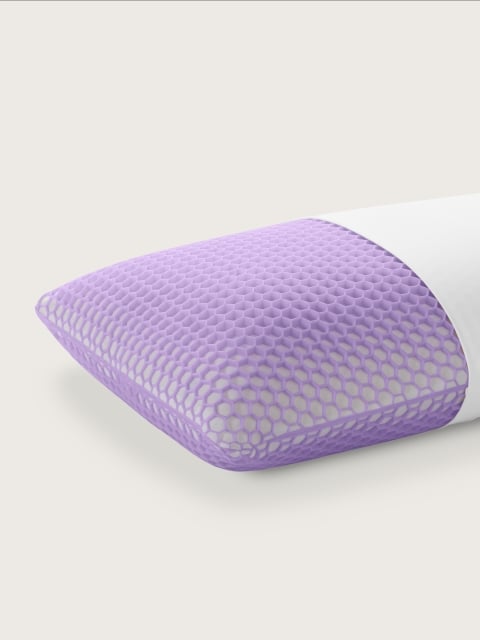
Manufacturer states: Purple combines a Honeycomb GelFlex Grid with a ventilated Talalay Latex core and a moisture-wicking mesh cover. Purple describes the design as breathable and temperature balancing, and offers the Harmony in three fixed lofts: Low 5.5 inches, Medium 6.5 inches, and Tall 7.5 inches.
Why it is relevant here: the combination of ventilated latex, an open grid structure and a breathable cover addresses several of the material-level factors that matter for hot sleepers. The three lofts also make it easier to match cooling with sleep-position fit.
Important nuance: Purple itself markets another pillow, the DreamLayer, as its “#1 for cooling.” That is a useful reminder not to turn the Harmony into an absolute winner claim. We treat it as a strong, relevant option rather than the only cooling pillow worth considering.
What we are not claiming: we are not saying Purple Harmony will eliminate night sweats or that its cooling feel will be identical for every sleeper. Room temperature, bedding, sleep position and individual heat sensitivity all matter.
Amazon affiliate link. Price and availability may change.
Buyer checklist for hot sleepers
- What is the pillow core made from?
- Is the core ventilated or perforated?
- Does the fill allow airflow, or does it form a dense solid block?
- Is the cover breathable and moisture-wicking?
- Is the cover removable and washable?
- Does the pillow’s loft fit your sleep position and shoulder width?
- Does the design rely on real airflow or mostly on a marketing cooling layer?
- Are there independent temperature-control test results?
- What trial and return policy applies to your purchase channel?
- If you have persistent or unexplained night sweats, could the cause be something other than the pillow?
Frequently asked questions
What pillow material is best for hot sleepers?
There is no single best material for everyone, but ventilated latex is a strong option because it is responsive and breathable. Shredded latex, buckwheat and some down-alternative designs can also provide good airflow.
Are latex pillows cooler than memory foam?
Often, yes. Latex generally retains less heat and can be ventilated for airflow, while solid memory foam tends to contour more closely and trap more body heat. Construction still matters.
Does pillow loft affect how hot a pillow feels?
Indirectly. Higher loft means more material and can increase contact around the head and neck, but the effect depends heavily on the material and ventilation. The right loft for your sleep position remains more important than choosing a lower pillow only for cooling.
Is Purple Harmony a cooling pillow?
Purple markets the Harmony as temperature balancing, using Honeycomb GelFlex Grid, ventilated Talalay Latex and a moisture-wicking mesh cover. We consider that construction relevant for hot sleepers, but individual cooling experience can vary.
Can a cooling pillow stop night sweats?
A more breathable pillow may reduce heat buildup around the head and neck, but it cannot address every cause of night sweats. Persistent, severe or unexplained night sweats deserve medical evaluation rather than relying on a bedding change alone.
Sources checked: Sleep Foundation guidance on cooling pillows, latex pillows and pillow-testing methodology; Purple Harmony official product documentation and Purple pillow-comparison pages. Purple-specific cooling and suitability claims remain attributed to Purple.